
Pranic Healing Courses: Basic, Advanced and Psychotherapy

Updated: Sep 1
Pranic Healing: A Path to Wellness and Spiritual Growth
========================================================
Pranic Healing, practiced in over 120 countries, offers a unique approach to well-being. It works with the energy body, including the aura and chakras. This method is based on the belief that the body can heal itself more quickly when its energy is clean and balanced. Pranic Healing utilizes "prana," or life energy, to support physical, emotional, and mental health. Whether you are new to energy healing or looking to deepen your skills, Pranic Healing provides structured courses that guide you through Basic, Advanced, and Psychotherapy levels. Each level builds on the previous one, helping you unlock greater healing potential for yourself and others.
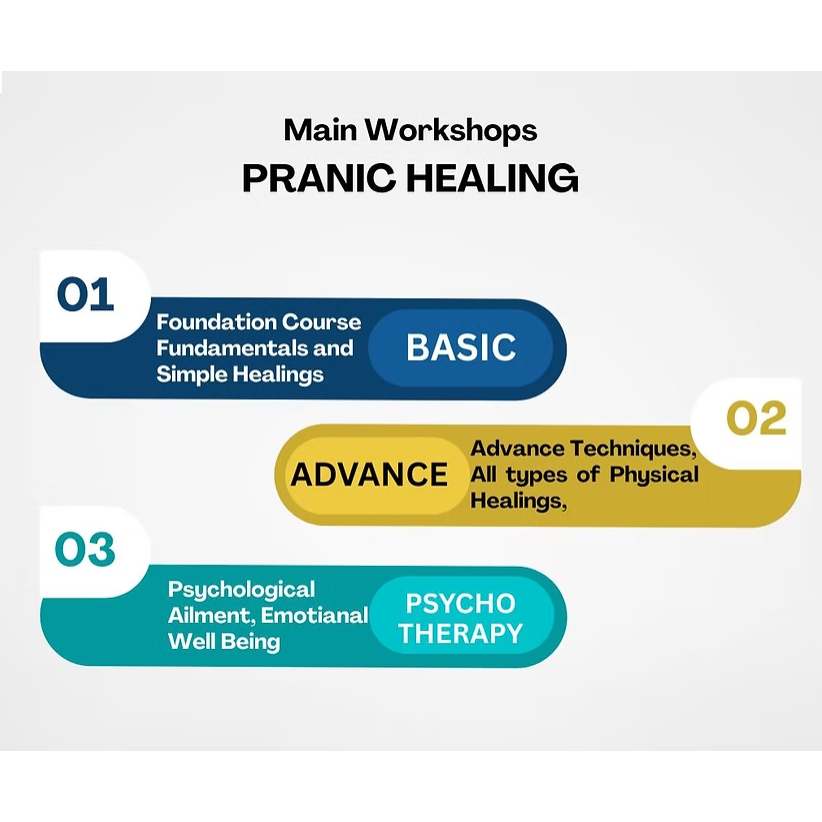
Pranic Healing Course: Basic Pranic Healing
Basic Pranic Healing is the foundation course that introduces you to the core principles of energy healing. In this two-day workshop, you will learn how to sense, cleanse, and energize the energy body, including the aura and chakras, in a simple manner. The course teaches straightforward techniques to remove dirty or stagnant energy and replace it with fresh prana. This process helps the body’s natural healing mechanisms work more efficiently.
Key Skills Gained in Basic Pranic Healing
In Basic Pranic Healing, you will acquire essential skills, including:
Sensitization of Hands: Learn to scan or feel the aura to detect energy imbalances.
Cleansing Techniques: Cleanse the affected energy centers (chakras) and organs.
Energizing the Body: Use fresh prana to accelerate healing.
For example, if someone has a headache, you will learn how to cleanse the energy around the head and energize it with healing prana to reduce pain. Many students report feeling more relaxed and experiencing pain relief immediately after practicing the treatment in class.
Basic Pranic Healing is suitable for anyone aged 16 and above. It is a natural healing method, whether you want to support family members or start a healing practice. The course requires no prior experience and focuses on practical, hands-on learning.
Advancing Skills with Advanced Pranic Healing
Once you complete the Basic course, you can take the next level course: Advanced Pranic Healing. This course expands your knowledge of the energy system and introduces more powerful techniques to address physical ailments. You will learn to work with specific color pranas, which are different types of energy vibrations that speed up healing.
What Advanced Pranic Healing Covers
Advanced Pranic Healing includes:
Treating Complex Conditions: Use targeted energy techniques for complex physical conditions.
Color Pranas: Work with colors like blue for inflammation, green for cleansing, and orange for expelling negative energy.
Enhanced Knowledge: Deepen your understanding of chakras and energy pathways to improve your energy sensitivity and healing speed.
Potent Healing Techniques: Master advanced techniques like Master Healing and Super Healing.
Cleansing Techniques: Learn to cleanse blood and organs for better health.
For instance, if someone suffers from a sprained ankle, you can apply blue prana to reduce swelling and pain quickly. This level also teaches how to combine different color pranas for more effective results.
The advanced course is ideal for those who want to specialize in physical healing or become professional Pranic Healers. It requires practice and commitment but offers rewarding skills that can make a real difference in people’s health.

Healing Emotions with Pranic Psychotherapy
Pranic Psychotherapy is the next step after mastering physical healing techniques. This level focuses on emotional and psychological well-being by cleansing negative thoughts, emotions, and traumatic memories from the aura and chakras. Many physical ailments have emotional roots (psychosomatic), so this approach addresses the cause rather than just the symptoms.
Learning in Pranic Psychotherapy
In Pranic Psychotherapy, you will learn to:
Identify Emotional Blockages: Recognize and remove negative energy programs.
Cleanse the Aura: Clear fears, anxieties, phobias, and depression.
Restore Mental Clarity: Use specific energy techniques to achieve emotional balance.
Support Rapid Relief: Help alleviate stress and psychological distress.
For example, a person struggling with anxiety may have energy congestion in the solar plexus chakra. By cleansing and energizing this area using Pranic Psychotherapy techniques, you can help reduce anxiety symptoms and promote calmness.
This course is valuable for healers, counselors, and anyone interested in emotional healing. It offers tools to support mental health naturally and complements traditional therapies.
Practical Benefits of Pranic Healing
Pranic Healing offers several practical benefits that make it appealing to many people:
Non-invasive and Safe: No physical contact is needed, reducing the risk of injury or infection.
Quick Results: Many experience relief after just one session.
Self-healing: You can apply techniques on yourself anytime.
Holistic Approach: It supports body, mind, and emotions together.
Accessible Learning: Courses are structured and easy to follow.
People have used Pranic Healing for conditions like headaches, colds, stress, insomnia, and emotional trauma. While it is not a substitute for medical treatment, it can complement conventional care and improve overall wellness.
How to Get Started with Pranic Healing
If you want to explore Pranic Healing, start with a Basic Pranic Healing course offered by authorized instructors of WPHI (World Pranic Healing Philippines). All registration for the classes in India is done through the authorized portal of WPHI. These workshops usually last two days and include theory, demonstrations, and practice sessions. After completing the basic level, you can choose to continue with Advanced Pranic Healing and then Pranic Psychotherapy.
Tips for Beginners
Here are some tips for beginners:
Practice Regularly: Develop sensitivity to energy.
Keep an Open Mind: Observe how your body responds.
Start Small: Use Pranic Healing for minor issues and self-care before trying complex cases.
Join Pegasus Healers: Practice with Pegasus Healers after the workshop free of cost through nurturing online or physical sessions.
Many find that learning Pranic Healing not only helps others but also improves their own health and emotional resilience. Embrace this journey of healing and growth, and let the light of prana guide you toward wellness!


Comments